"Medevac!" — Howard McGrew
It's high noon on the 22nd of March, 1971 in the Republic of Viet Nam. "High" because Range platoon of Delta Company has spent the morning struggling to the top of a ridge in the mountains 90 kilometers east, northeast of Bien Hoa.
I am PFC Howard McGrew and I'm standing partially bent over, trying to balance the weight of a backpack and 200 rounds of extra M-60 machine gun ammo in the can in my right hand. I take a quick glance around to pick my defensive position for the lunch break, but my glasses are fogging over because the overhang of my steel helmet captures moisture steaming off my sweat-soaked shirt. Reluctantly, I set the ammo can on the ground and swing my pack down beside it. I'm beat and I know I'll just have to pick it all up in a minute or two and move once the perimeter is established. Propping my M-16 rifle against the rest of the gear, I wipe my glasses, and my face, with a corner of the green towel which protects my neck and shoulders from the pack straps.
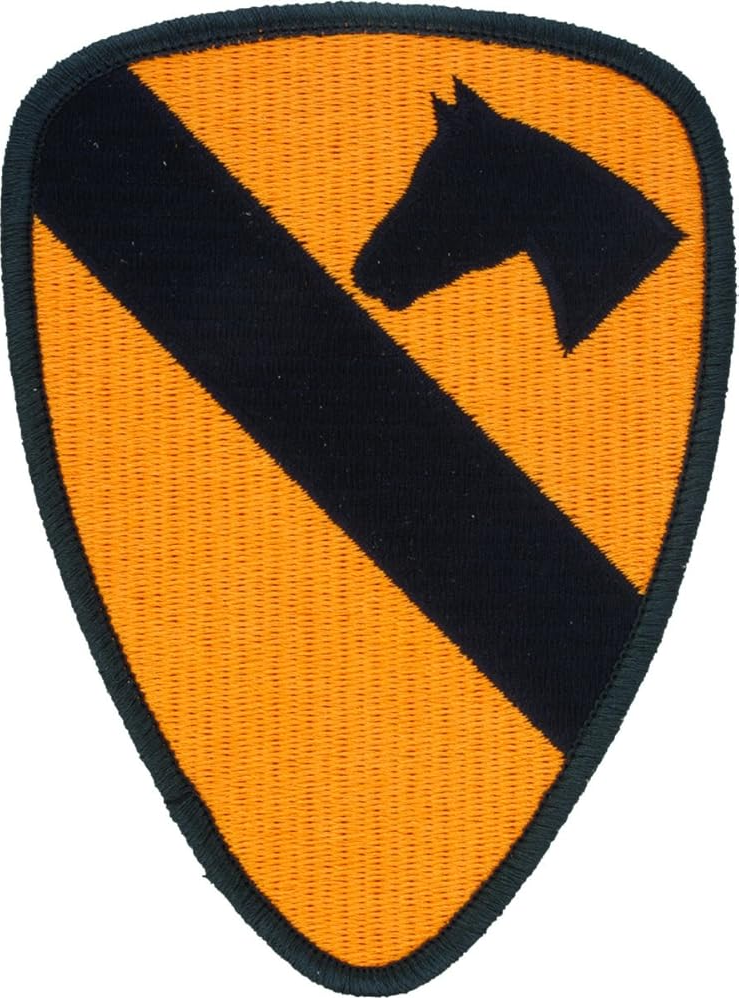
The rest of the "grunts" in the platoon are slowly taking their places along the ridge line. Everybody is dragging from the heat, from the climb, and from coming off a three day stand-down in the First Cav Division's R&R Center on the South China Sea at Vung Tau. We are protected from the midday sun by dense crowns of the mature hardwood trees which blanket this AO (area of operation). It is really picturesque, with little undergrowth, and the smell of leaves and old wood rotting back to nature.
Several feet away, another soldier staggers to a halt and collapses to the ground, intending to prop himself against the side of a large stump. Unfortunately, due to his exhaustion, he didn't notice the stump was actually a leaf camouflaged home for some very ill-tempered Vietnamese ground bees. There is a muffled crunch as the side of the dirt mound gives way. Within seconds, the air is alive with bees, hundreds and thousands of bees, all bent on revenge.
It is like being attacked with red hot needles over and over again. In my weary state, it takes a while to comprehend what is happening. My mind desperately tries to determine what course of action to take. I flail at the airborne kamikazes with the towel, to no avail. All I can do is slap at the attackers and try to brush them away, but they hang on and sting. Within 5 minutes, all around me is chaos. Some GI's are desperately digging in their bedrolls for mosquito netting. Remembering that bee keepers use smoke to calm a hive, someone yells "Pop smoke!" The caps that ignite colored smoke grenades are soon popping all over the perimeter and the swoosh of smoke expelled from the canisters combines with cries of pain. I pull the pin on one of my own and stand in the acrid, purple fog. But nothing helps. The entire area becomes surreal as panicked, shadowy forms race through a billowing haze of Cav Yellow and Goofy Grape.
Finally, there is nothing left to do except run, down off the ridge and away from the enraged insects. Run, until they are no longer stinging and until my mind recovers enough to realize I'm all alone and empty handed and everything is quiet—in a combat zone! The next 30 minutes I spend creeping from tree to tree yelling out in the loudest whisper I can muster, "Pssst! Over here! Don't shoot! GI!" The fear in the pit of my stomach begins to subside as clusters of two and three men are reunited at various impromptu rendezvous points. Thankfully, the Viet Cong are all on another mountain this day, and order is finally established.
While two squads are sent back up the mountain under cover of mosquito netting to recover the abandoned weapons and equipment, it is becoming apparent that there are some casualties. Two soldiers are exhibiting signs of allergic reactions to the bee venom; one has stomach cramps and the other is having trouble breathing. Four others, me included, are beginning to swell on face and hands. The platoon leader sends out a recon squad to find a place for the medevac chopper to land, but there is none on the mountain. The only open space is a rock slide on the south side of the ridge surrounded by tall trees. Faced with oncoming darkness and at least one man in serious trouble, the lieutenant pleads for a hovering evacuation, something rarely done because it is dangerous for the casualty and leaves the medevac chopper in a position of vulnerability to enemy fire for long periods of time, especially with multiple extractions.
Battalion command finally agrees that the dangerous medevac is necessary so preparations are made to secure the area. I am quite surprised to learn that I am to be taken out of the field. My squad leader points out that an infantry rifleman is not much good without eyesight and a trigger finger. Indeed, one of my eyes is totally closed and my hands have ballooned so that I can hardly bend my fingers. I still protest because I know that I can't take any equipment on the flight. It has taken me two months to gather all the gear I think I need to be combat ready. They will break down my pack among the others in my squad to carry until it can be sent to the rear area on the next resupply day, and never to be seen again, according to the Army way. That is my irrational fear; never mind the state of my health.
It takes a long time to get the medevac chopper, but finally the signature whop! whop! whop! of a Huey can be heard in the distance. They have prioritized the multiple extraction, in case anything goes wrong. I am second in line because, by now, my other eye is all but swelled shut. When my turn comes, I am led out of the tree line onto the rock slide. Suddenly, I am aware of the blast from the rotor blades some forty feet up. They put me on a yellow jungle penetrator and yell to hang on. Soon, I'm swinging crazily back and forth across the open space. My dwindling eyesight can just make out a blur of trees as I go round and round in the chopper rotor wash. After an eternity to winch me up, I'm swung into the cargo bay by a door gunner.
There's discord in the chopper. Over a screaming turbine engine I can hear the pilot yelling to a medic frantically working on the guy who's barely breathing, "What do you mean they're not shot? I'm hovering over an updraft and they've got BEE stings!" This is followed by some other less savory expressions of his incredulity. Apparently, no one told the pilot the exact nature of the medevac. The rest of the day is just a blur. I think my brain shut down from the fatigue and stress after it was apparent that I was out of danger.
We were all treated in an evac hospital at FSB Mace. I got some pills and a shot to counteract the bee venom. By the next day I could see again. Two days after that, I went back to the firebase and found most of my equipment intact. The fourth day, I was back in the field. The guy who almost died was later given the company clerk's job…shouldn't have been in the field in the first place.
Later, I learned just how skillful the Huey pilot had been. A helicopter has to be "controlled" continuously to make it fly. The pilot is constantly adjusting for altitude and forward or lateral motion according to weight, wind speed, air density and other factors. The medevac chopper was attempting to hover in an updraft generated by heat rising off the bare rock face. Complicating matters was a down draft over the cooler, surrounding woods. Not crashing period was pretty good flying, but holding the helicopter steady enough to keep from dashing someone on the end of a cable into the tree line was a miracle.
Copyright © 2008 Howard L. McGrew
