Camp Radcliff
| Occupancy | Element | Source |
|---|---|---|
| 20 Sep 1965 – Jan 1968 13.993, 108.6485 |
D Co, 2/8 Cav · 1st Cav Div base camphigh | Camp Radcliff base record (Kelley; Stanton, Vietnam Order of Battle); 1st Cav Div deployment record D Company flew up from Qui Nhơn on or about 20 September 1965 and was home-based at Camp Radcliff through the division's Central Highlands era. It was the staging point for the An Khê tactical area of responsibility and for the autumn 1965 Pleiku Campaign, and the company's home base between operations until the division shifted north in January 1968. |
Overview
Camp Radcliff was the 1st Cavalry Division's base camp in Vietnam — the place D Company came home to between operations for the whole Central Highlands era. It sat on Highway QL-19 at An Khê, roughly 60 km inland from Qui Nhơn and 60 km short of Pleiku, in Bình Định Province. Built beginning 27 August 1965 by the 70th Engineer Battalion, it grew into the largest helicopter base in the world at the time, laid out to handle the division's 400-plus aircraft.
For the men who had just crossed the Pacific on the USNS Geiger and ridden trucks and Chinooks up from the coast, Radcliff was the first ground they held in Vietnam. D Company flew in around 20 September 1965 and was based here until the division moved north to Camp Evans in January 1968.
Namesake
The camp was named for Major Donald G. Radcliff (1928–1965), executive officer of the 1st Squadron, 9th Cavalry and the 1st Cavalry Division's first combat death. In August 1965 Radcliff was part of the site-selection team — under Brig. Gen. John M. Wright — that scoured Bình Định Province for the division's base camp while the division itself was still at sea, crossing the Pacific. He helped choose the very ground the base would stand on.
With the team in country and the 7th Marines about to launch Operation Starlite, Radcliff volunteered to fly support. At dawn on 18 August 1965, piloting a UH-1B gunship escorting the airmobile assault into LZ Blue — which was ringed by the 60th VC Battalion — near Chu Lai, he pinpointed the enemy and laid down suppressive fire so the troop-carriers could land, and was mortally wounded at the controls. He was 37 years old, on his first day of combat. Radcliff was posthumously awarded the Distinguished Flying Cross (USARV General Orders 372, 1 Sep 1965); the base he had helped select was formally dedicated in his name on 21 February 1966. His name is on the Wall at panel 2E, line 59.
Location
The base lay at approximately 13.993° N, 108.6485° E, astride QL-19 in the An Khê District of Bình Định Province, at about 1,380 feet of elevation. An An Khê Airfield to the southeast could land C-130 transports. The coordinates are confirmed against the base record; the site is today used by the People's Army of Vietnam.
The Golf Course
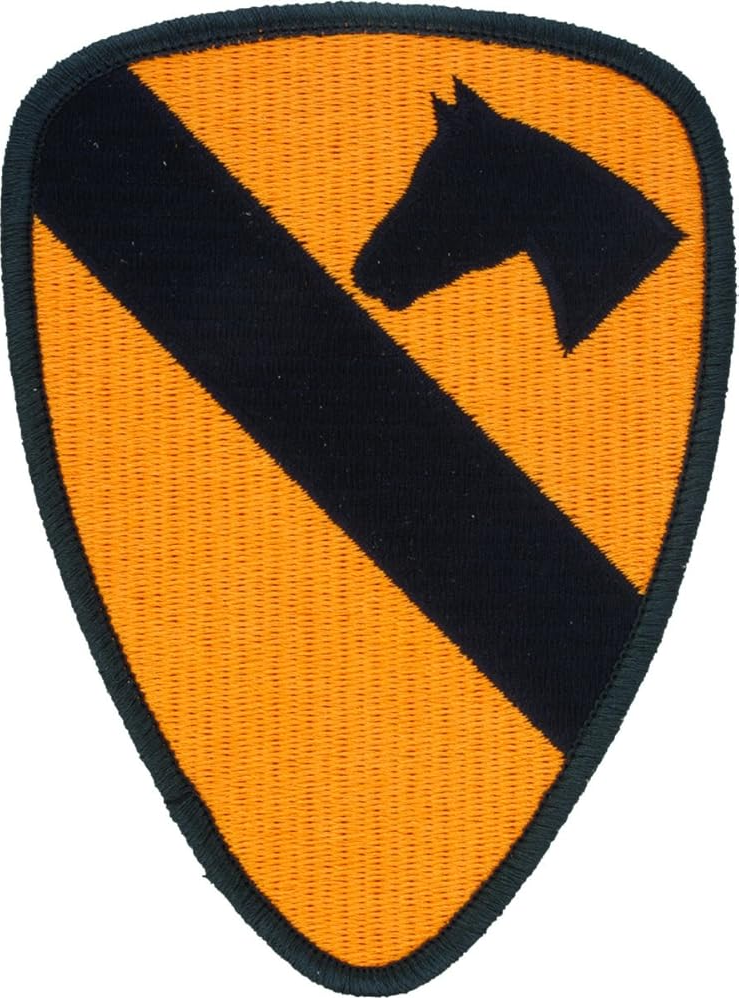
The base's nickname came from how it was built. Brig. Gen. Wright wanted the underlying grass kept but cut close to the ground — to hold down the dust helicopter rotors would otherwise throw up — and called the cleared, tree-stripped expanse a "golf course." The name stuck. An advance party of roughly 1,040 soldiers, officers and privates alike swinging grub hooks, cleared the six-square-kilometer area by hand, while a brigade of the 101st Airborne secured the perimeter around them as they worked. The division painted its shoulder insignia on nearby Hòn Cong Mountain, a landmark visible for miles, and ringed the camp with a 26-kilometer perimeter, the Green Line, watched from three-man towers spaced every 50 meters.
The base was not immune to attack. On the night of 3 September 1966, the Viet Cong put 119 mortar rounds onto the Golf Course in about five minutes, killing four soldiers, wounding 76, and damaging 77 helicopters. Further mortar and sapper attacks struck in October and November 1968 and again in November 1969, under the units that followed the 1st Cav.
Tenure
The 1st Cavalry Division held Camp Radcliff as its base camp from September 1965 until it moved to Camp Evans in January 1968. The 173rd Airborne Brigade then occupied it into mid-1969, followed by the 4th Infantry Division through December 1970. For D Company, 2/8 Cav, Radcliff was the constant in the back of the war's first two-plus years — the place the company returned to from the Pleiku Campaign and the Bình Định operations that followed.
The American chapter closed when the 4th Infantry Division left in December 1970 and the base passed to the South Vietnamese Army. The site is used today by the People's Army of Vietnam.
The fall of An Khê, 1975
Camp Radcliff's end came in March 1975, a month before the fall of Saigon. As the North Vietnamese drove into the Central Highlands, the South Vietnamese garrison withdrew and An Khê — the helicopter base the 1st Cav had carved out of the brush nine years earlier — fell without a fight.
For the Americans who had served there, the news landed hard. John Samuel Tieman, who had been at Camp Radcliff with the 4th Infantry Division in 1970, watched An Khê turn red on the evening-news map: "Camp Radcliff fell without a fight. The South Vietnamese Army just ran… And I wept bitterly." What he grieved was one name and all of them at once — Specialist 4 Eric Williams, killed years before Tieman's tour while building the bridge at An Khê that carried his name, whose plaque Tieman read every time he passed. "Because," he wrote, "it was all in vain."
That grief — private, isolating, fixed on a single name out of all the names — was how a great many Vietnam veterans met 1975. Williams' bridge stands on this page as a marker of it.
If you or someone in your family was at Camp Radcliff — the Golf Course, the Green Line towers, the insignia on Hòn Cong Mountain, or the 1966 mortar attack — we'd welcome a name, a photo, or a memory to add to the record.
Sources
| Claim | Source | Confidence |
|---|---|---|
| Base camp of the 1st Cav Div; built from 27 Aug 1965 by 70th Engr Bn | Kelley, Where We Were in Vietnam; Stanton, Vietnam Order of Battle | Confirmed |
| Coordinates 13.993° N, 108.6485° E; QL-19, An Khê, Bình Định | Base record | Confirmed |
| Named for Maj. Donald G. Radcliff, 1/9 Cav, KIA 18 Aug 1965 (Op Starlite) | Kelley | Confirmed |
| Radcliff was 1/9 Cav XO & on the An Khê site-selection team (BG Wright); died escorting LZ Blue | 1-22infantry.org (Bows, Vietnam Military Lore); VVMF | Confirmed |
| BG Wright coined "golf course"; ~1,040-man advance party cleared ~6 km² by hand; 101st Abn secured perimeter | Bows, Vietnam Military Lore (1-22infantry.org) | High |
| Formal dedication 21 Feb 1966 (Amb. Lodge, Gen. Westmoreland, MG Kinnard); DFC USARV GO 372 | 1-22infantry.org | Confirmed |
| "Golf Course" — brush hand-cleared to cut rotor dust; Green Line 26 km; Hòn Cong insignia | Tolson, Airmobility 1961–1971; Manick; Powers | High |
| Largest helicopter base in the world; 400+ aircraft; An Khê airfield (C-130) | Tolson; base record | High |
| 3 Sep 1966 VC mortar attack: 119 rounds, 4 KIA, 76 WIA, 77 helicopters damaged | U.S. Army After Action Report, 17 Sep 1966 | Confirmed |
| 1st Cav left for Camp Evans Jan 1968; 173rd to mid-1969; 4th ID to Dec 1970 | Kelley; Stanton | Confirmed |
| Base passed to ARVN; An Khê fell without a fight, March 1975 (a month before Saigon) | John Samuel Tieman, "The Fall of An Khe," Coal Hill Review (veteran memoir) | First-hand / memoir |
| D Co 2/8 home-based here Sep 1965 – Jan 1968 | 1st Cav Div / 2/8 deployment record (division-level; company tenure inferred) | High |
Open Questions
- [ ] Confirm D Co 2/8's specific quarters/area within the camp and the exact date 2/8 displaced to Camp Evans (early 1968) — 2/8 daily staff journal, NARA RG 472.
- [ ] Was the 2/8 Cav battalion CP at Radcliff during garrison periods? (Would set command_post.)
- [ ] A confirmed-present soldier (letter, photo, or "I was there") would move men from the circumstantial list to confirmed.
- [ ] Confirm SP4 Eric Williams and the An Khê "Williams Bridge" (name, unit, date — ~1966 per the Tieman memoir) — a candidate An Khê landmark / namesake note.
Today: On Highway QL-19 at An Khê, ~60 km NW of Qui Nhơn and ~60 km SE of Pleiku. The site is now used by the PAVN; the 1st Cav insignia was once painted on nearby Hòn Cong Mountain as a landmark.
Camp Radcliff was the 1st Cavalry Division's base camp from late August 1965 until the division moved north to Camp Evans in January 1968; the 173rd Airborne Brigade then held it to mid-1969, and the 4th Infantry Division through December 1970. The "closed" date here marks the end of the 1st Cav (and 2/8 Cav) tenure, not the base's final use.


